|
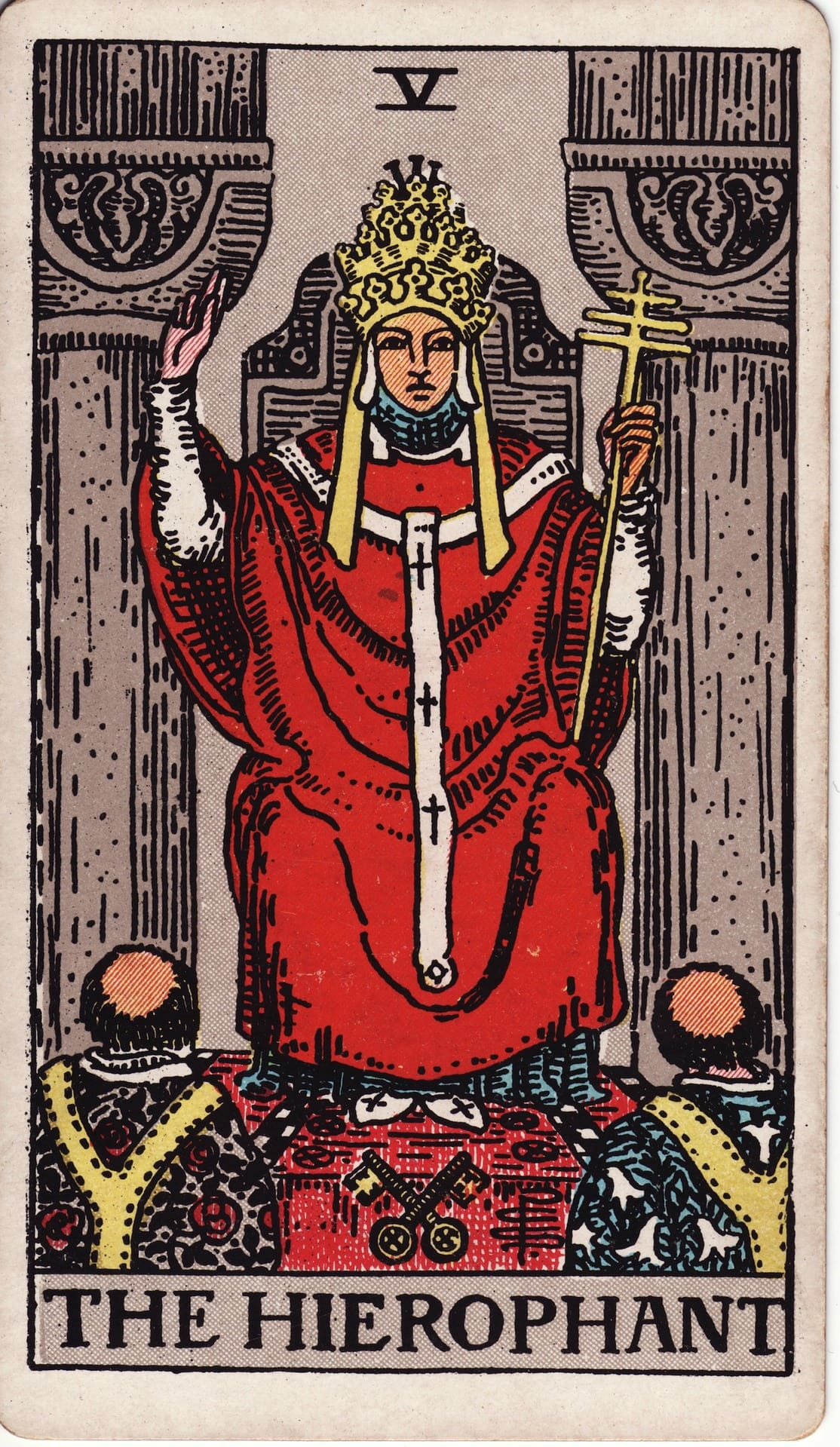
The Hierophant is the fifth numbered card (V) of the Major Arcana in Tarot, representing tradition, spiritual guidance, and conformity.
When The Hierophant appears in the reverse, its upright qualities of tradition, spiritual guidance, education, and moral values are disrupted, blocked, or misdirected, introducing challenges or shadow aspects.
Traditional Interpretation of the Hierophant
The Hierophant is often depicted as a religious or spiritual figure, seated between two pillars, holding a staff or scepter, with two acolytes at his feet, symbolizing authority, teaching, and tradition. The imagery evokes structure, guidance, and spiritual wisdom. Key themes include:
-
Tradition and Conformity: The Hierophant signifies adherence to established beliefs, institutions, or societal norms, valuing structure and tradition.
-
Spiritual Guidance: It represents seeking or receiving wisdom from a mentor, teacher, or spiritual authority, often tied to organized religion or established practices.
-
Education and Learning: The card emphasizes the pursuit of knowledge through formal systems, such as schools, religious teachings, or structured learning.
-
Moral Values and Ethics: The Hierophant reflects alignment with moral or spiritual principles, guiding decisions through a sense of duty or righteousness.
-
Cautionary Note: The card warns against blind conformity or rigid dogma, urging balance between tradition and personal intuition to avoid stagnation or suppression.
In a reading, The Hierophant encourages you to seek guidance from trusted sources, honor tradition, or align with ethical values. It’s a call to respect established systems while remaining open to personal insights to avoid being overly bound by convention.
Traditional Interpretation of the Hierophant in the reverse
When The Hierophant appears in the reverse, its upright qualities of tradition, spiritual guidance, education, and moral values are disrupted, blocked, or misdirected, introducing challenges or shadow aspects.
-
Rebellion Against Tradition: The Hierophant in the reverse suggests rejecting societal norms, institutions, or traditions, embracing nonconformity or questioning established systems.
-
Lack of Guidance: It indicates a lack of mentorship or spiritual direction, feeling lost or unsupported in seeking wisdom or structure.
-
Dogmatism or Rigidity: Conversely, it can reflect excessive adherence to dogma, where rigid beliefs stifle personal growth or creativity.
-
Moral Conflict: The card suggests struggles with ethical dilemmas or misalignment with personal values, leading to confusion or inauthenticity.
-
Cautionary Note: The Hierophant in the reverse warns against either rejecting tradition without discernment or clinging to outdated beliefs, urging you to find a balance between independence and guidance.
In a reading, the Hierophant in the reverse encourages questioning rigid systems, seeking personal truth, or finding new sources of guidance to restore alignment with your values.
Alternative Interpretation of the Hierophant
An alternative interpretation views The Hierophant through an esoteric, psychological, or archetypal lens, emphasizing his spiritual and transformative significance. This perspective draws from Jungian psychology, mythology, or mystical traditions:
-
Divine Wisdom: Esoterically, The Hierophant represents a conduit for divine or universal wisdom, channeling spiritual truths through structured teachings or sacred rituals.
-
Archetype of the Spiritual Teacher: The card aligns with the spiritual teacher or high priest archetype, akin to figures like Moses or a guru, guiding the soul toward enlightenment through wisdom and discipline.
-
Inner Faith: Psychologically, The Hierophant signifies alignment with personal or spiritual values, integrating beliefs into the self to foster inner growth and purpose.
-
Sacred Tradition: The card reflects connection to universal truths through sacred traditions or rituals, anchoring the soul in divine order while seeking higher understanding.
-
Shadow of Dogma: The alternative view highlights the shadow side as spiritual rigidity or over-reliance on external authority, which can disconnect from personal intuition or divine truth.
This interpretation might resonate in readings focused on spiritual growth, seeking divine guidance, or aligning with sacred values, positioning The Hierophant as a symbol of spiritual authority with the need for balance with individual intuition.
Alternative Interpretation of the Hierophant in the reverse
In a reading, the reversed Hierophant encourages questioning rigid systems, seeking personal truth, or finding new sources of guidance to restore alignment with your values.
-
Blocked Divine Wisdom: The Hierophant in the reverse suggests a disconnection from universal truths, where fear, doubt, or external pressures block access to spiritual guidance or sacred knowledge.
-
Weakened Spiritual Teacher Archetype: The spiritual teacher archetype falters, indicating difficulty embodying or finding divine wisdom, leading to spiritual confusion or isolation.
-
Inner Disharmony: Psychologically, it reflects a struggle to integrate personal beliefs with spiritual purpose, where inner conflict or external dogma hinders soul growth.
-
Misdirected Faith: The role of sacred tradition is disrupted, leading to either rebellion against divine order or blind adherence to false spiritual authorities, causing misalignment.
-
Shadow of Rebellion or Dogma: The shadow side may manifest as rejecting spiritual guidance (ignoring divine truth) or clinging to rigid beliefs (disconnecting from personal intuition), hindering spiritual progress.
This interpretation might appear in readings focused on spiritual misalignment, blocked leadership, or challenges in establishing inner order, urging reconnection with divine authority and balanced discipline.
Summary (Upright)
-
Traditional: The Hierophant represents tradition, spiritual guidance, education, and moral values, encouraging respect for established systems with a caution against blind conformity.
-
Alternative: The Hierophant symbolizes divine wisdom, the spiritual teacher archetype, inner faith, and sacred tradition, with a shadow of dogma.
Summary (In the reverse)
-
Traditional meaning in the reverse: The Hierophant in the reverse indicates rebellion against tradition, lack of guidance, dogmatism, or moral conflict, urging balanced independence and guidance.
-
Alternative meaning in the reverse: The Hierophant in the reverse reflects blocked divine wisdom, weakened spiritual teacher archetype, inner disharmony, or misdirected faith, urging spiritual realignment.
|
 If you like this content, please consider supporting me through my