|
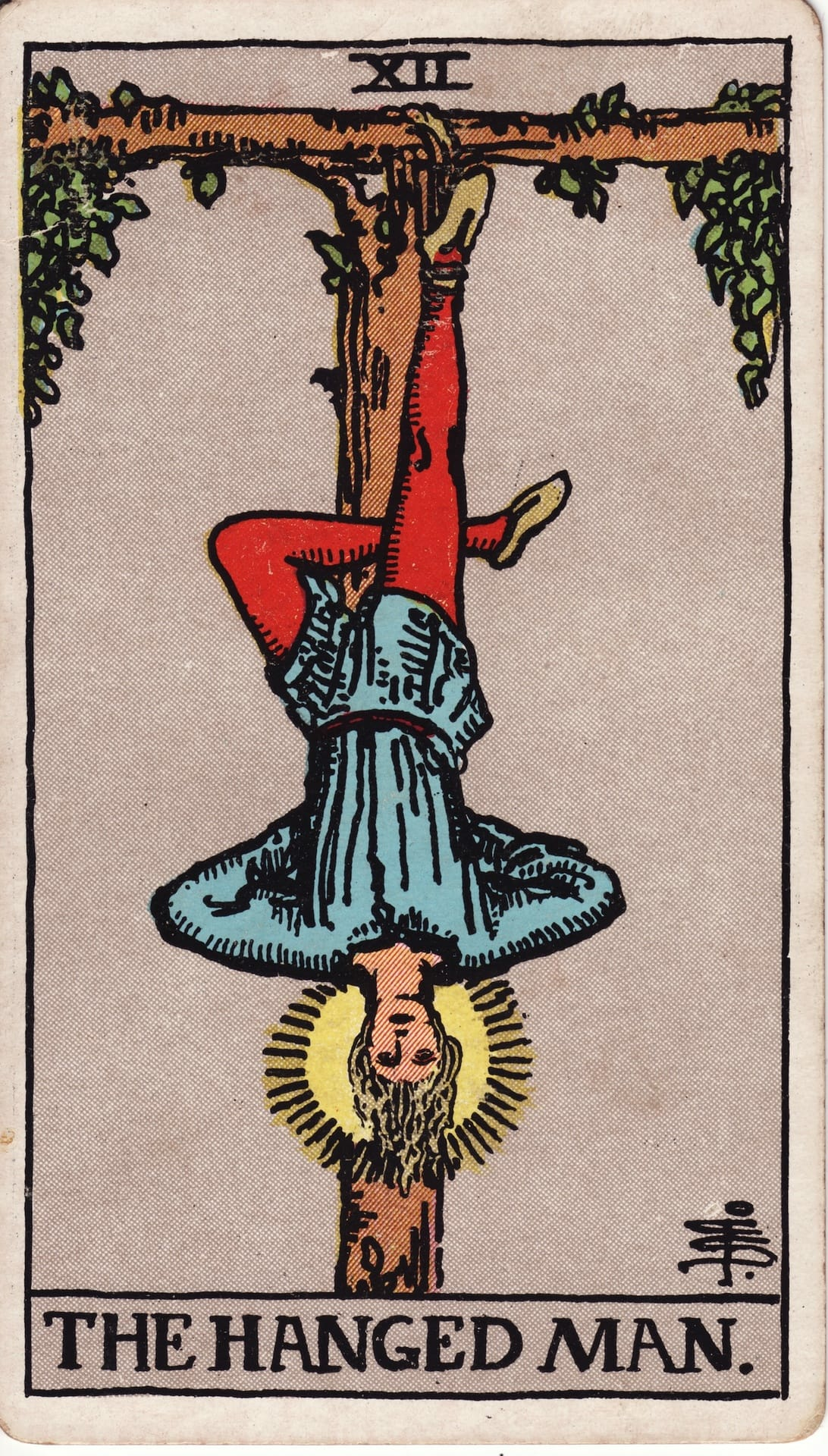
The Hanged Man is the twelfth numbered card (XII) of the Major Arcana in Tarot, symbolizing surrender, sacrifice, and a shift in perspective.
When The Hanged Man appears in the reverse, its upright qualities of surrender, sacrifice, perspective shift, and patience are disrupted, blocked, or misdirected, introducing challenges or shadow aspects.
Traditional Interpretation of the Hanged Man
The Hanged Man is often depicted as a figure suspended upside-down from a tree or cross, with one leg crossed behind the other and a serene expression, a halo around their head, symbolizing surrender and enlightenment. The imagery evokes pause, sacrifice, and new perspectives. Key themes include:
-
Surrender and Letting Go: The Hanged Man signifies releasing control, surrendering to circumstances, or accepting the need to pause and let events unfold.
-
Sacrifice and Growth: It represents giving up something (e.g., ego, plans, or attachments) to gain deeper insight or spiritual growth, often requiring selflessness.
-
Shift in Perspective: The card emphasizes seeing things differently, often through a new lens gained by pausing or stepping back from action.
-
Patience and Acceptance: It encourages patience, embracing stillness, and trusting the process, even when progress feels stalled.
-
Cautionary Note: The card warns against resisting surrender or clinging to control, which could prolong stagnation, and advises balancing passivity with eventual action.
In a reading, The Hanged Man encourages you to let go of control, embrace a period of pause, and seek new perspectives through patience and sacrifice. It’s a call to trust the process while avoiding excessive passivity or avoidance of responsibility.
Traditional Interpretation of the Hanged Man in the reverse
When The Hanged Man appears in the reverse, its upright qualities of surrender, sacrifice, perspective shift, and patience are disrupted, blocked, or misdirected, introducing challenges or shadow aspects.
-
Resistance to Surrender: The Hanged Man in the reverse suggests clinging to control, resisting the need to let go, or fighting against circumstances, leading to frustration or stagnation.
-
Avoidance of Sacrifice: It indicates reluctance to make necessary sacrifices, such as letting go of outdated plans or ego, hindering personal growth or progress.
-
Stuck Perspective: The card reflects being trapped in old ways of thinking, unable to shift perspectives or see new possibilities, causing mental or emotional blockage.
-
Impatience or Restlessness: It suggests rushing past a needed pause, acting impulsively, or avoiding reflection, which can lead to poor decisions or missed insights.
-
Cautionary Note: The Hanged Man in the reverse warns against resisting change, avoiding introspection, or forcing action prematurely, urging you to embrace surrender and seek new viewpoints.
In a reading, the Hanged Man in the reverse encourages letting go of resistance, embracing necessary pauses, and opening to new perspectives to move forward with clarity.
Alternative Interpretation of the Hanged Man
An alternative interpretation views The Hanged Man through an esoteric, psychological, or archetypal lens, emphasizing its spiritual and transformative significance. This perspective draws from Jungian psychology, mythology, or mystical traditions:
-
Divine Surrender: Esoterically, The Hanged Man represents surrendering the ego to divine will, aligning with universal flow to achieve spiritual enlightenment or transformation.
-
Archetype of the Martyr: The card aligns with the martyr or sacrificial archetype, akin to figures like Odin (hanging on Yggdrasil) or Christ, symbolizing sacrifice for divine wisdom or soul growth.
-
Inner Transformation: Psychologically, it signifies a profound shift in consciousness, releasing old beliefs or attachments to integrate deeper self-awareness and spiritual truth.
-
Spiritual Pause: The card reflects a sacred pause, where stillness allows connection to divine guidance, fostering clarity and alignment with soul purpose.
-
Shadow of Stagnation: The alternative view highlights the shadow side as excessive surrender or spiritual escapism, where passivity disconnects from practical reality or delays growth.
This interpretation might resonate in readings focused on spiritual awakening, transformative surrender, or aligning with divine purpose, positioning The Hanged Man as a symbol of enlightened pause with the need for eventual action.
Alternative Interpretation of the Hanged Man in the reverse
In a reading, the Hanged Man in the reverse encourages letting go of resistance, embracing necessary pauses, and opening to new perspectives to move forward with clarity.
-
Blocked Divine Surrender: The Hanged Man in the reverse suggests a disconnection from divine will, where ego, fear, or attachment blocks alignment with universal flow or spiritual transformation.
-
Weakened Martyr Archetype: The martyr archetype falters, indicating difficulty embracing spiritual sacrifice or surrendering ego, leading to spiritual stagnation or misalignment.
-
Inner Resistance: Psychologically, it reflects resistance to inner transformation, where clinging to old beliefs or fears prevents self-awareness or soul growth.
-
Misdirected Pause: The role of spiritual pause is disrupted, leading to either forcing action against divine timing or excessive passivity that avoids responsibility, causing disharmony.
-
Shadow of Escapism or Control: The shadow side may manifest as escaping reality through over-surrender (spiritual bypassing) or clinging to control (rejecting divine flow), obstructing soul progress.
This interpretation might appear in readings focused on spiritual resistance, blocked transformation, or challenges in aligning with divine timing, urging reconnection with surrender and spiritual clarity.
Summary (Upright)
-
Traditional: The Hanged Man represents surrender, sacrifice, shift in perspective, and patience, encouraging letting go with a caution against excessive passivity.
-
Alternative: The Hanged Man symbolizes divine surrender, the martyr archetype, inner transformation, and spiritual pause, with a shadow of stagnation.
Summary (In the reverse)
-
Traditional meaning in the reverse: The Hanged Man in the reverse indicates resistance to surrender, avoidance of sacrifice, stuck perspective, or impatience, urging openness to pause and new viewpoints.
-
Alternative meaning in the reverse: The Hanged Man in the reverse reflects blocked divine surrender, weakened martyr archetype, inner resistance, or misdirected pause, urging spiritual realignment.
|
 If you like this content, please consider supporting me through my