|
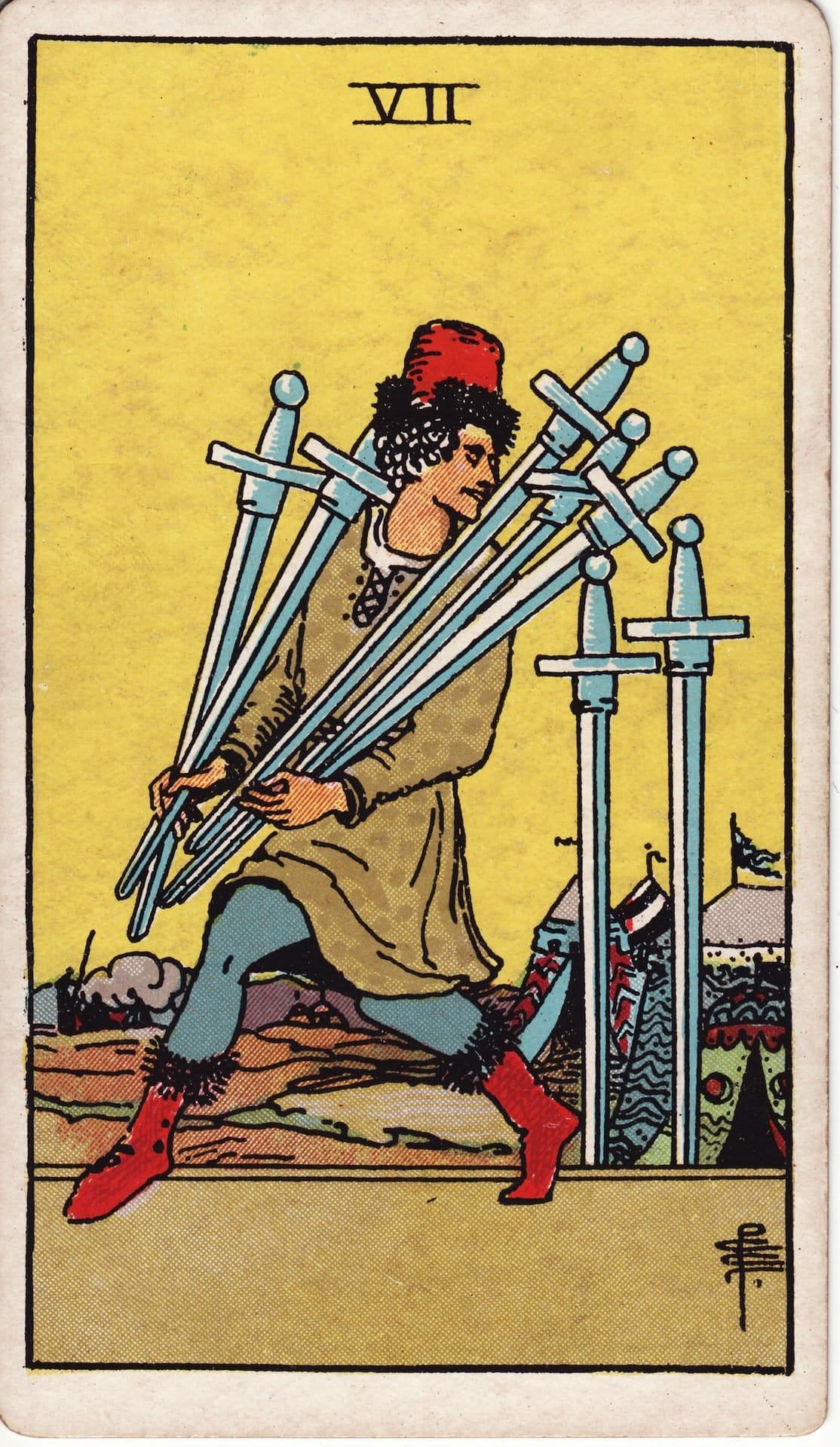
The Seven of Swords is the seventh card of the suit of Swords in the Minor Arcana of the Tarot, representing strategy, deception, and careful navigation.
When the Seven of Swords appears in the reverse in a Tarot reading, its upright qualities of deception, strategic planning, avoiding confrontation, and self-interest are disrupted, exposed, or redirected.
Traditional Interpretation of the Seven of Swords
The Seven of Swords is often depicted as a figure sneaking away with five swords, leaving two behind, in a scene suggesting stealth or cunning, symbolizing strategic thinking or deceit. The imagery evokes secrecy, planning, and ethical ambiguity. Key themes include:
-
Deception or Trickery: The Seven of Swords signifies deceit, manipulation, or acting in secret, such as hiding intentions, lying, or taking something without permission, often to gain an advantage.
-
Strategic Planning: This card reflects the use of cunning, strategy, or careful planning to navigate a challenging situation, emphasizing intellect and resourcefulness to achieve goals discreetly.
-
Avoiding Confrontation: It suggests avoiding direct conflict or responsibility, choosing a subtle or indirect approach to protect yourself or achieve an outcome, sometimes at the expense of honesty.
-
Self-Interest or Betrayal: The card can indicate acting in self-interest, potentially betraying others’ trust, or being on the receiving end of someone else’s deception, leading to feelings of mistrust.
-
Cautionary Note: The Seven of Swords warns against unethical behaviour or deceit, as it may backfire, damaging trust or reputation. It also cautions against being overly secretive or avoiding necessary confrontations, which could lead to complications.
In a reading, the Seven of Swords encourages you to use strategy and tact to navigate challenges but to do so ethically, ensuring your actions align with integrity. It’s a call to assess whether secrecy or avoidance is truly necessary, avoid betrayal, and be cautious of others’ hidden motives, while maintaining honesty where possible.
Traditional Interpretation of the Seven of Swords in the reverse
Upright, the Seven of Swords embodies deception, strategic planning, avoiding confrontation, and self-interest. When appearing in the reverse, these qualities may shift toward revelation, consequences, or a change in approach, leading to the following meanings:
-
Exposure of Deception: The Seven of Swords in the reverse suggests that deceit or secretive actions are uncovered, either by you or against you, leading to consequences such as damaged trust, guilt, or the need to make amends.
-
Abandoning Dishonesty: This card can indicate a shift away from manipulative or unethical behaviour, choosing honesty or accountability instead, potentially as a result of recognizing the harm caused by deceit.
-
Failed Strategies: The cunning plans of the upright card may falter, indicating poorly executed strategies, miscalculations, or plans that backfire, leading to setbacks or a need to reassess your approach.
-
Confronting Avoided Issues: The tendency to avoid confrontation is challenged, suggesting that you’re forced to face issues directly, which can lead to resolution but may be uncomfortable or challenging.
-
Cautionary Note: The Seven of Swords in the reverse warns against continuing deceptive practices, as they’re likely to be exposed, causing further harm. It also cautions against becoming paralyzed by guilt or fear of confrontation, which could hinder progress or honest communication.
In a reading, the Seven of Swords in the reverse encourages you to embrace honesty, face the consequences of past actions, and confront issues directly to restore trust or clarity. It’s a call to abandon manipulative tactics, learn from failed strategies, and avoid guilt or avoidance that could perpetuate conflict or stagnation.
Alternative Interpretation of the Seven of Swords
An alternative interpretation might view the Seven of Swords through a more esoteric, psychological, or archetypal lens, emphasizing its role as a symbol of mental agility, shadow navigation, or the strategic pursuit of truth. This perspective may draw from Jungian psychology, mythology, or spiritual traditions:
-
Mental Agility and Discernment: Esoterically, the Seven of Swords represents the sharp intellect’s ability to navigate complex situations, using discernment to cut through illusions or protect spiritual truth, often requiring subtle or strategic manoeuvring.
-
Archetype of the Trickster: In a mythological sense, the card embodies the archetype of the trickster or cunning strategist, akin to figures like Hermes or Coyote, who uses wit and resourcefulness to outsmart obstacles, though with potential moral ambiguity.
-
Shadow Navigation: Psychologically, the Seven of Swords signifies confronting or navigating the shadow self—hidden fears, desires, or motives—using mental clarity to strategically address inner conflicts without direct confrontation.
-
Strategic Pursuit of Truth: The card reflects a careful, calculated approach to uncovering or protecting spiritual or personal truth, where discretion is needed to safeguard your inner growth or purpose from external judgment or interference.
-
Shadow of Deception or Avoidance: The alternative view might highlight the shadow side as succumbing to self-deception or manipulating others to avoid facing uncomfortable truths, which could disconnect you from authenticity or spiritual alignment.
This alternative interpretation might resonate in readings focused on inner strategy, navigating personal shadows, or protecting spiritual truth, positioning the Seven of Swords as a symbol of mental cunning and discernment with potential ethical challenges.
Summary (Upright)
-
Traditional: The Seven of Swords represents deception, strategic planning, avoiding confrontation, and self-interest, encouraging ethical strategy with a caution against dishonesty or betrayal.
-
Alternative: The Seven of Swords symbolizes mental agility, the trickster archetype, shadow navigation, or strategic pursuit of truth, with a shadow of deception or avoidance.
Alternative Interpretation of the Seven of Swords in the reverse
In the alternative interpretation, the Seven of Swords upright symbolizes mental agility, the trickster archetype, shadow navigation, and the strategic pursuit of truth. When appearing in the reverse, these esoteric and archetypal themes are blocked, revealed, or misaligned, leading to the following:
-
Blocked Mental Agility: The Seven of Swords in the reverse may indicate a disruption in navigating complex inner or spiritual situations, where mental clarity or discernment is clouded, leading to confusion or misalignment with your higher purpose.
-
Weakened Trickster Archetype: The archetype of the trickster or cunning strategist falters, suggesting difficulty using wit or resourcefulness effectively, or a rejection of manipulative tendencies in favour of authenticity, though this shift may feel disorienting.
-
Exposure of Inner Shadows: The shadow navigation of the upright card shifts, indicating that hidden fears, desires, or motives are brought to light, forcing you to confront your shadow self or self-deception, which can be a catalyst for spiritual growth if faced honestly.
-
Stalled Pursuit of Truth: The strategic pursuit of spiritual or personal truth is obstructed, reflecting resistance to uncovering deeper insights or a failure to protect your inner growth, leading to spiritual stagnation or disconnection.
-
Shadow of Guilt or Denial: The shadow side becomes prominent, manifesting as either guilt (feeling burdened by past manipulative actions or self-deception) or denial (avoiding inner truths, blocking spiritual alignment). This can result in spiritual or emotional turmoil.
In this alternative view, the Seven of Swords in the reverse might appear in readings focused on spiritual or psychological exposure, challenges in aligning with truth, or overcoming deceptive tendencies. It urges you to confront inner shadows, embrace authenticity, and restore mental clarity, while avoiding guilt or continued denial that hinders growth.
Summary (In the reverse)
-
Traditional meaning in the Reverse: The Seven of Swords in the reverse indicates exposure of deception, abandoning dishonesty, failed strategies, or confronting avoided issues, calling for honesty and accountability.
-
Alternative meaning in the Reverse: The Seven of Swords in the reverse reflects blocked mental agility, weakened trickster archetype, exposure of inner shadows, stalled pursuit of truth, or guilt/denial, urging alignment with authentic spiritual growth.
|