|
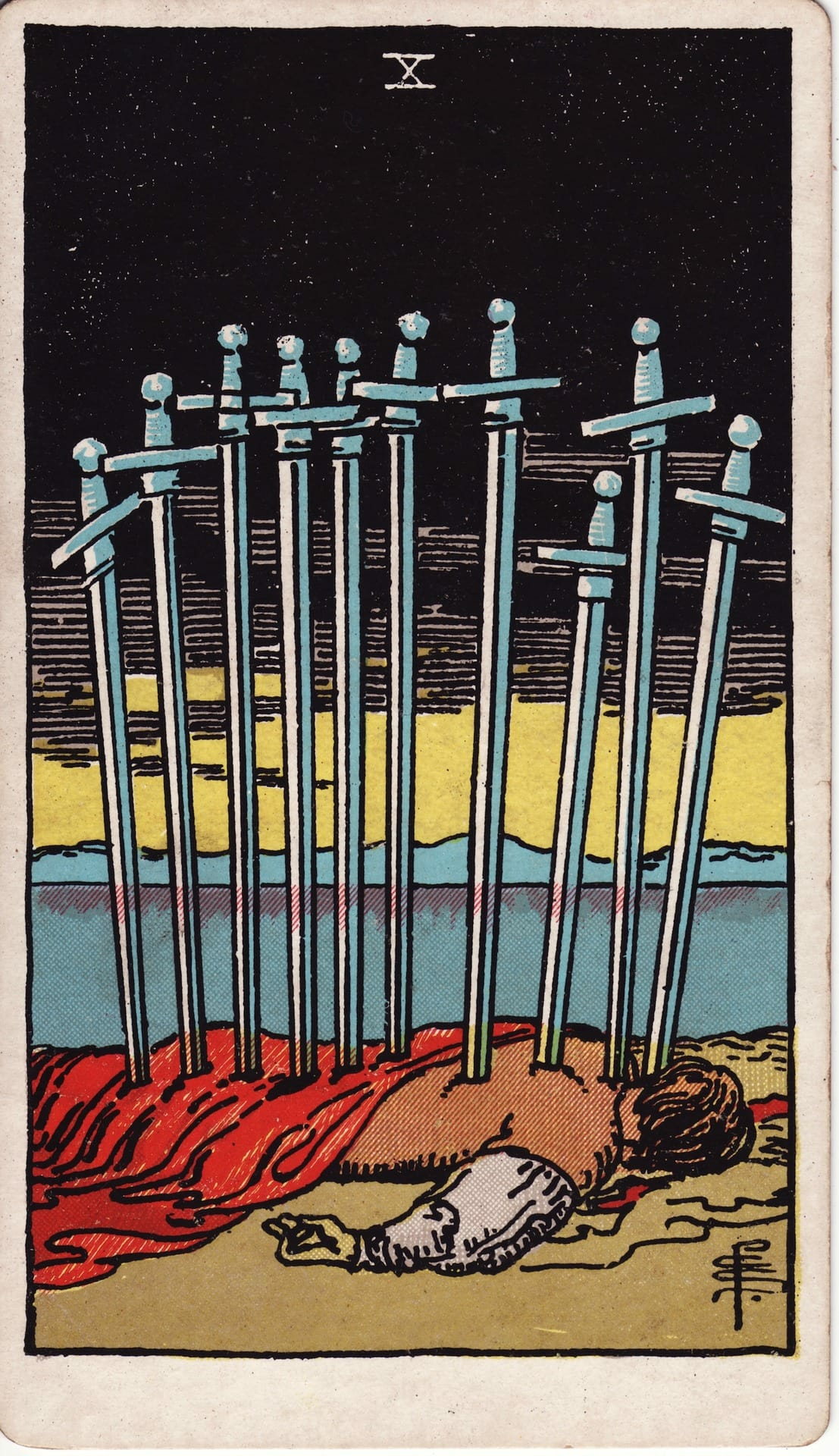
The Ten of Swords is the tenth card of the suit of Swords in the Minor Arcana of the Tarot, representing endings, betrayal, and transformation through pain.
When the Ten of Swords appears in the reverse in a Tarot reading, its upright qualities of painful endings, betrayal, rock bottom, and acceptance are disrupted, alleviated, or shifted in new ways.
Traditional Interpretation of the Ten of Swords
The Ten of Swords is often depicted as a figure lying face-down with ten swords piercing their back, under a dark or stormy sky, sometimes with a rising sun in the distance, symbolizing finality and closure. The imagery evokes defeat, betrayal, and the end of a cycle. Key themes include:
-
Painful Endings: The Ten of Swords signifies a definitive end, often accompanied by pain, such as the collapse of a relationship, project, or belief system, marking a point of no return.
-
Betrayal or Backstabbing: This card suggests feelings of betrayal, whether by others (e.g., deceit or abandonment) or by circumstances, leading to deep emotional or mental wounds.
-
Rock Bottom: It represents hitting a low point, where challenges or struggles feel overwhelming, but this low point also signals that things can only improve from here, as the worst is over.
-
Acceptance and Release: The card encourages accepting the end of a cycle, releasing resistance, and allowing healing to begin, as the rising sun hints at hope and renewal after pain.
-
Cautionary Note: The Ten of Swords warns against dwelling in victim hood or despair, which can prolong suffering. It also cautions against ignoring the lessons of this ending, as they are crucial for future growth.
In a reading, the Ten of Swords encourages you to acknowledge painful endings, accept the reality of loss or betrayal, and begin the healing process with hope for renewal. It’s a call to release what cannot be changed, learn from the experience, and avoid getting stuck in self-pity or resentment.
Traditional Interpretation of the Ten of Swords in the reverse
Upright, the Ten of Swords embodies painful endings, betrayal, rock bottom, and acceptance. When appearing in the reverse, these qualities may indicate recovery, resistance, or a shift in perspective, leading to the following meanings:
-
Recovery and Renewal: The Ten of Swords in the reverse suggests the beginning of recovery from a painful ending or betrayal, where the worst is over, and you start to heal, regain hope, or rebuild after hitting rock bottom.
-
Resistance to Closure: This card can indicate clinging to a situation or relationship that has already ended, refusing to accept the reality of loss, which prolongs pain and delays healing.
-
Lingering Pain or Victim hood: Instead of moving forward, you may dwell in feelings of betrayal, resentment, or self-pity, perpetuating a victim mindset that hinders progress and emotional recovery.
-
Overcoming Defeat: The card appearing in the reverse may reflect a turning point where you begin to rise above defeat, learning from past pain and finding strength to move forward, though this process may feel slow or challenging.
-
Cautionary Note: The Ten of Swords in the reverse warns against holding onto resentment or refusing to let go of a finished cycle, as this can trap you in suffering. It also cautions against rushing recovery without fully processing the lessons of the ending.
In a reading, the Ten of Swords in the reverse encourages you to embrace healing, release lingering pain, and accept the end of a cycle to move toward renewal. It’s a call to let go of victim hood, process emotions constructively, and avoid clinging to past betrayals or resisting necessary closure.
Alternative Interpretation of the Ten of Swords
An alternative interpretation might view the Ten of Swords through a more esoteric, psychological, or archetypal lens, emphasizing its role as a symbol of spiritual surrender, ego death, or transformative rebirth. This perspective may draw from Jungian psychology, mythology, or spiritual traditions:
-
Spiritual Surrender: Esoterically, the Ten of Swords represents the surrender of the ego or false self, where the piercing swords symbolize the painful but necessary release of illusions, leading to spiritual liberation and alignment with divine truth.
-
Archetype of the Sacrificed Hero: In a mythological sense, the card embodies the archetype of the sacrificed hero, akin to figures like Osiris or Christ, who undergoes profound suffering or death to achieve transformation and rebirth, marking a pivotal spiritual transition.
-
Ego Death and Rebirth: Psychologically, the Ten of Swords signifies the collapse of ego-driven structures—such as pride, false beliefs, or attachments—where the pain of this ending facilitates a rebirth of consciousness and authenticity.
-
Transformative Crisis: The card reflects a profound spiritual or emotional crisis that, while painful, serves as a catalyst for awakening, forcing you to release outdated patterns and embrace a higher state of awareness.
-
Shadow of Despair or Resistance: The alternative view might highlight the shadow side as clinging to despair or resisting the necessary surrender of ego, which blocks spiritual transformation and perpetuates suffering.
This alternative interpretation might resonate in readings focused on spiritual rebirth, profound transformation, or navigating existential crises, positioning the Ten of Swords as a symbol of painful but liberating endings that pave the way for renewal.
Summary (Upright)
-
Traditional: The Ten of Swords represents painful endings, betrayal, rock bottom, and acceptance, encouraging healing through release with a caution against victim hood or despair.
-
Alternative: The Ten of Swords symbolizes spiritual surrender, the sacrificed hero archetype, ego death, or transformative crisis, with a shadow of despair or resistance.
Alternative Interpretation of the Ten of Swords in the reverse
In the alternative interpretation, the Ten of Swords upright symbolizes spiritual surrender, the sacrificed hero archetype, ego death, and transformative crisis. When appearing in the reverse, these esoteric and archetypal themes are resolved, resisted, or misaligned, leading to the following:
-
Emergence from Spiritual Crisis: The Ten of Swords in the reverse indicates emerging from a dark night of the soul, where the painful surrender of ego leads to spiritual renewal, reconnection with divine truth, or a rebirth of consciousness.
-
Empowered Sacrificed Hero: The archetype of the sacrificed hero shifts toward empowerment, suggesting progress in integrating the lessons of suffering, allowing you to embody wisdom and align with your higher self.
-
Resistance to Ego Death: Conversely, the card appearing in the reverse may reflect resistance to surrendering ego-driven patterns or illusions, clinging to outdated beliefs or fears, which blocks spiritual transformation and perpetuates inner turmoil.
-
Stalled Transformation: The transformative crisis of the upright card is stalled, indicating difficulty fully embracing the rebirth process or learning from spiritual pain, leading to spiritual stagnation or disconnection.
-
Shadow of Resentment or Denial: The shadow side may manifest as resentment (holding onto spiritual wounds, preventing growth) or denial (avoiding the truth of necessary surrender), hindering alignment with your higher purpose.
In this alternative view, the Ten of Swords in the reverse might appear in readings focused on emerging from spiritual crises, integrating transformative lessons, or challenges in fully surrendering to growth. It urges you to embrace spiritual renewal, release ego-driven resistance, and align with your higher self, while avoiding resentment or denial that blocks transformation.
Summary (In the reverse)
-
Traditional meaning in the Reverse: The Ten of Swords in the reverse indicates recovery, resistance to closure, lingering pain, or overcoming defeat, calling for healing and acceptance of endings.
-
Alternative meaning in the Reverse: The Ten of Swords in the reverse reflects emergence from spiritual crisis, empowered sacrificed hero, resistance to ego death, stalled transformation, or resentment/denial, urging alignment with spiritual renewal.
|