|
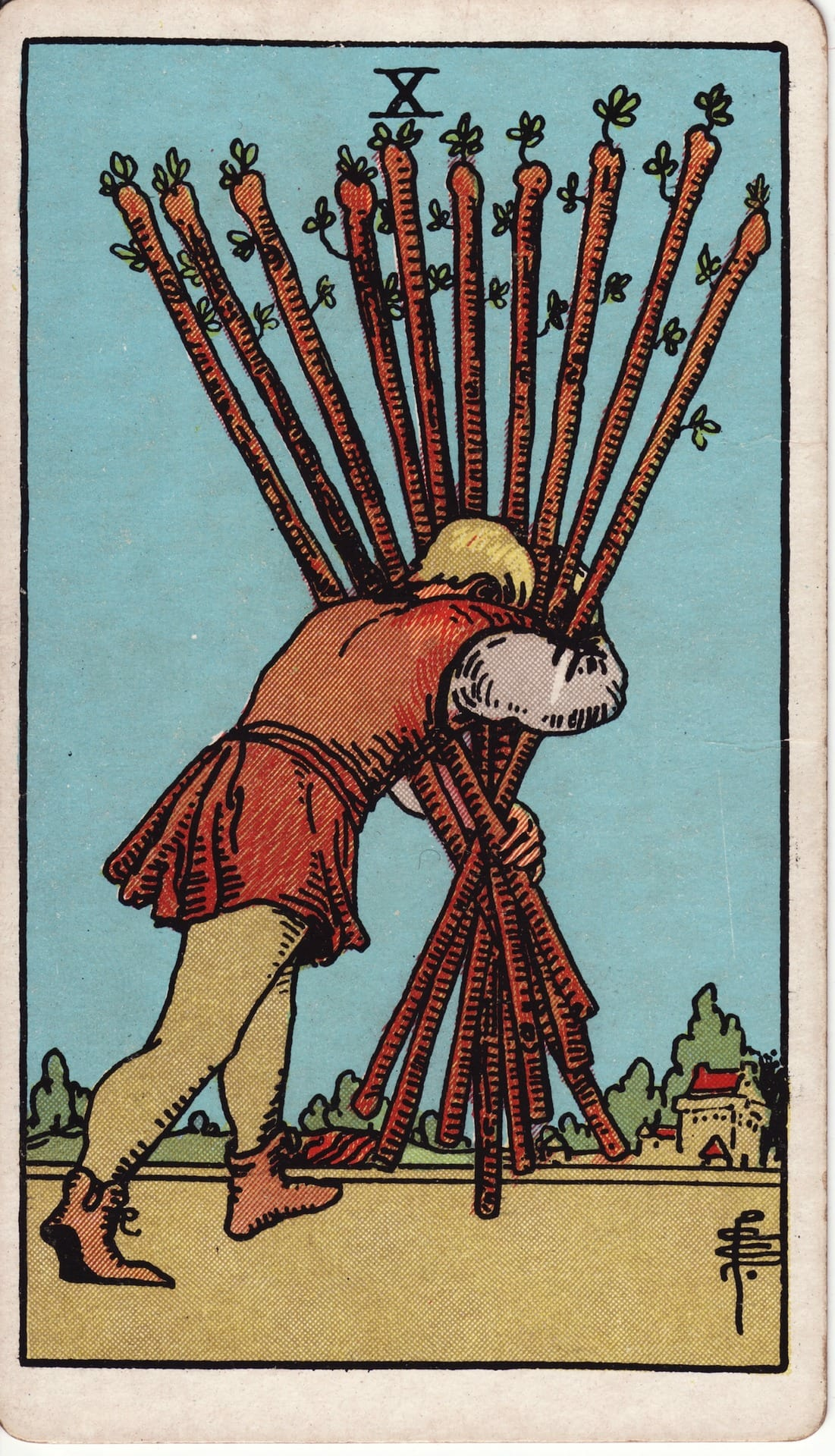
The Ten of Wands is the tenth card of the suit of Wands in the Minor Arcana of the Tarot, representing burden, responsibility, and the weight of ambition.
When the Ten of Wands appears in the reverse in a Tarot reading, its upright qualities of burden, over extension, hard work toward completion, and sacrifice for goals are disrupted, alleviated, or misdirected
Traditional Interpretation of the Ten of Wands
The Ten of Wands is often depicted as a figure struggling to carry a heavy bundle of ten wands, head bowed under the weight, symbolizing effort and strain. The imagery evokes overburden, duty, and perseverance. Key themes include:
-
Burden and Responsibility: The Ten of Wands signifies taking on heavy responsibilities or obligations, often to the point of feeling overwhelmed, as you carry the weight of multiple tasks or expectations.
-
Over extension: This card reflects pushing yourself too hard, juggling too many commitments, or struggling to maintain momentum due to excessive demands, leading to stress or burnout.
-
Hard Work Toward Completion: It suggests nearing the end of a challenging journey, where your efforts are close to paying off, but the final stretch requires significant determination and endurance.
-
Sacrifice for Goals: The card indicates sacrificing personal time or well-being to achieve ambitions, highlighting the cost of success and the need to evaluate priorities.
-
Cautionary Note: The Ten of Wands warns against taking on more than you can handle, as this can lead to exhaustion or diminished returns. It also cautions against refusing help or clinging to burdens unnecessarily, urging delegation or rest.
In a reading, the Ten of Wands encourages you to acknowledge your burdens, prioritize tasks, and seek support to lighten the load. It’s a call to persevere toward your goals, reassess commitments, and avoid burnout by balancing effort with self-care.
Traditional Interpretation of the Ten of Wands in the reverse
Upright, the Ten of Wands embodies burden, over extension, hard work toward completion, and sacrifice for goals. When appearing in the reverse, these qualities are disrupted or lightened, leading to the following meanings:
-
Releasing Burdens: The Ten of Wands in the reverse suggests letting go of excessive responsibilities or obligations, either by delegating tasks, setting boundaries, or choosing to drop unnecessary burdens, leading to relief.
-
Avoiding Responsibility: Conversely, you may be shirking duties or avoiding commitments, which can lead to unfinished tasks, missed opportunities, or letting others down due to fear of overwhelm.
-
Burnout or Collapse: The weight of responsibilities becomes unsustainable, indicating burnout, exhaustion, or a breakdown from carrying too much for too long, requiring rest and re-evaluation.
-
Lack of Direction: The effort to complete goals falters, reflecting scattered energy or a loss of focus, where you struggle to prioritize or see the path to completion, leading to frustration.
-
Cautionary Note: The Ten of Wands in the reverse warns against avoiding necessary responsibilities, as this can delay progress or harm relationships. It also cautions against ignoring signs of burnout, urging you to seek support, prioritize self-care, and release what no longer serves you.
In a reading, the Ten of Wands in the reverse encourages you to lighten your load, address burnout, and refocus your efforts. It’s a call to delegate, set boundaries, and avoid evading responsibilities or succumbing to exhaustion, while seeking balance to move forward effectively.
Alternative Interpretation of the Ten of Wands
An alternative interpretation might view the Ten of Wands through a more esoteric, psychological, or archetypal lens, emphasizing its role as a symbol of spiritual burden, soul testing, or the weight of divine purpose. This perspective may draw from Jungian psychology, mythology, or spiritual traditions:
-
Spiritual Burden: Esoterically, the Ten of Wands represents the weight of spiritual responsibilities or a soul-level test, where the wands symbolize the fire of divine purpose that challenges your endurance to align with higher truth.
-
Archetype of the Burdened Seeker: In a mythological sense, the card embodies the archetype of the burdened seeker or martyr, akin to figures like Atlas or Sisyphus, carrying the weight of spiritual growth or collective purpose through sacrifice.
-
Soul Testing and Endurance: Psychologically, the Ten of Wands signifies an inner struggle to integrate spiritual or personal aspirations, where the weight of inner growth or transformation tests your resilience and commitment to your higher self.
-
Carrying Divine Purpose: The card reflects the effort to uphold a sacred mission or vision, where the burden of spiritual work feels heavy but is necessary for soul evolution and alignment with divine will.
-
Shadow of Overburden or Martyrdom: The alternative view might highlight the shadow side as taking on excessive spiritual responsibilities, leading to martyrdom or disconnection from joy, or refusing to release outdated burdens, hindering growth.
This alternative interpretation might resonate in readings focused on spiritual endurance, soul-level challenges, or carrying a higher purpose, positioning the Ten of Wands as a symbol of transformative burden with the need for balance and release.
Summary (Upright)
-
Traditional: The Ten of Wands represents burden, over extension, hard work toward completion, and sacrifice for goals, encouraging prioritization and support with a caution against burnout.
-
Alternative: The Ten of Wands symbolizes spiritual burden, the burdened seeker archetype, soul testing, or carrying divine purpose, with a shadow of overburden or martyrdom.
Alternative Interpretation of the Ten of Wands in the reverse
In the alternative interpretation, the Ten of Wands upright symbolizes spiritual burden, the burdened seeker archetype, soul testing, and carrying divine purpose. When appearing in the reverse, these esoteric and archetypal themes are blocked or misaligned, leading to:
-
Relief from Spiritual Burden: The Ten of Wands in the reverse may indicate releasing heavy spiritual responsibilities, where letting go of excessive soul-level obligations allows reconnection with joy and divine alignment.
-
Weakened Burdened Seeker Archetype: The archetype of the burdened seeker falters, suggesting difficulty embracing the tests of spiritual endurance, leading to avoidance of soul growth or disconnection from higher purpose.
-
Spiritual Burnout: The weight of spiritual aspirations becomes overwhelming, reflecting exhaustion from pursuing divine purpose without balance, causing disconnection or loss of faith in your soul’s journey.
-
Misaligned Purpose: The effort to carry divine purpose falters, indicating a lack of clarity or focus in spiritual goals, where distractions or avoidance prevent alignment with your higher self.
-
Shadow of Avoidance or Martyrdom: The shadow side may manifest as avoidance (shirking spiritual responsibilities, leading to stagnation) or persistent martyrdom (clinging to burdens for validation), hindering authentic spiritual growth.
In this alternative view, the Ten of Wands in the reverse might appear in readings focused on spiritual exhaustion, misalignment with purpose, or challenges in releasing soul-level burdens. It urges you to let go of excessive spiritual weight, reconnect with divine joy, and realign with your higher calling, while avoiding avoidance or martyrdom.
Summary (In the reverse)
-
Traditional meaning in the Reverse: The Ten of Wands in the reverse indicates releasing burdens, avoiding responsibility, burnout, or lack of direction, calling for delegation and self-care.
-
Alternative meaning in the Reverse: The Ten of Wands in the reverse reflects relief from spiritual burden, weakened seeker archetype, spiritual burnout, misaligned purpose, or avoidance/martyrdom, urging alignment with divine joy.
|