|
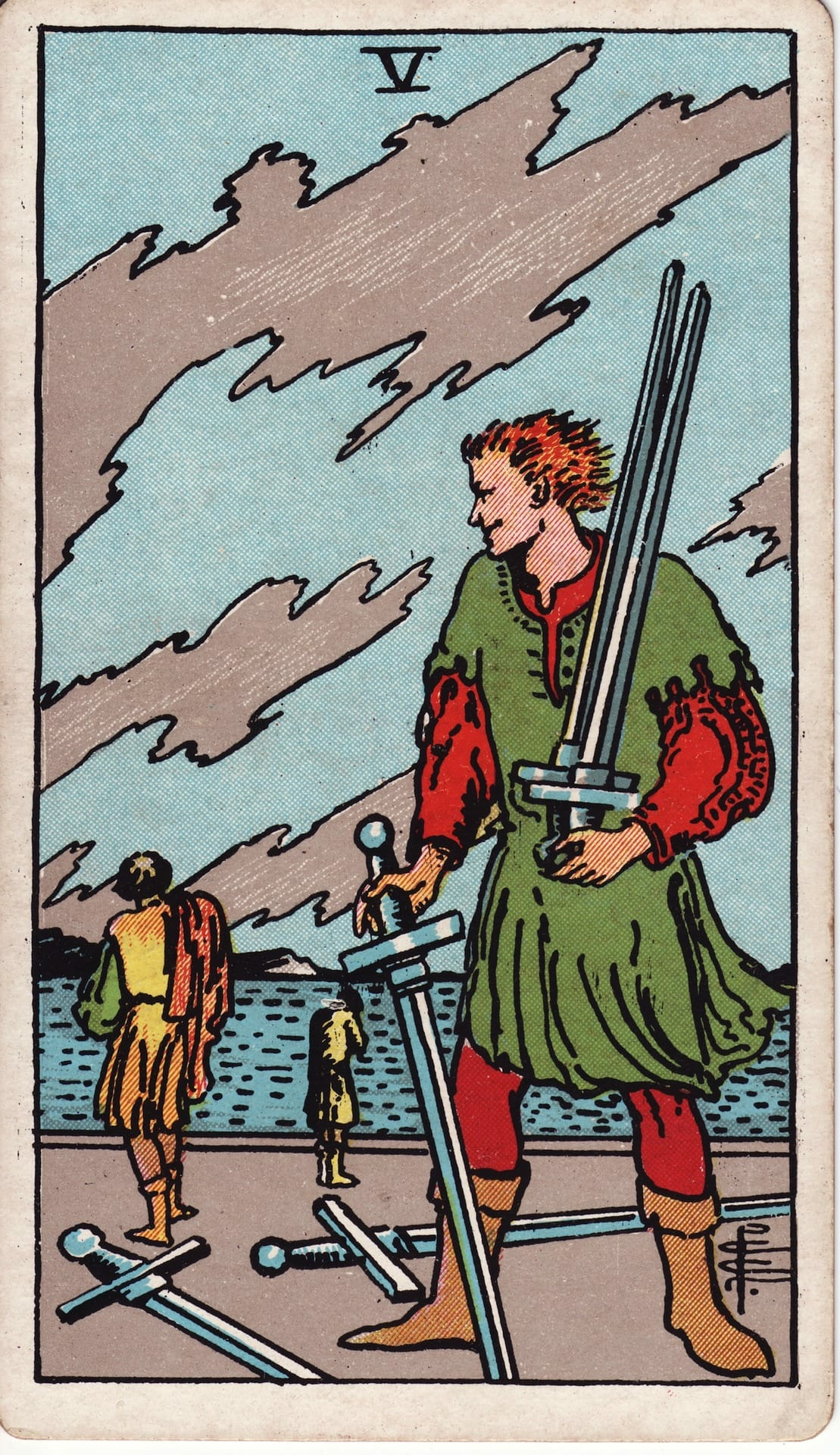
The Five of Swords is the fifth card of the suit of Swords in the Minor Arcana of the Tarot, representing conflict, defeat, and the cost of winning.
When the Five of Swords appears in the reverse in a Tarot reading, its upright qualities of conflict, victory at a cost, ego-driven actions, and defeat are disrupted, resolved, or intensified in new ways.
Traditional Interpretation of the Five of Swords
The Five of Swords is often depicted as a figure holding three swords, with two others on the ground, while two defeated figures walk away in a stormy or desolate landscape, symbolizing conflict and loss. The imagery evokes tension, victory at a cost, and ethical dilemmas. Key themes include:
-
Conflict and Betrayal: The Five of Swords signifies disputes, arguments, or betrayals, often involving sharp words, manipulation, or power struggles, leading to strained relationships or hurt feelings.
-
Victory at a Cost: This card suggests winning a battle but at a significant cost, such as damaged relationships, guilt, or moral compromise, where the victory feels hollow or Pyrrhic.
-
Ego-Driven Actions: It reflects actions driven by ego, pride, or a need to dominate, where one party seeks to win at all costs, potentially disregarding fairness or others’ well-being.
-
Defeat or Humiliation: For those on the losing side, the card can indicate feelings of defeat, humiliation, or powerlessness, often resulting from being outmanoeuvred or betrayed.
-
Cautionary Note: The Five of Swords warns against engaging in conflicts for the sake of ego or pursuing victories that harm others or yourself in the long run. It also cautions against holding onto resentment or playing the victim after a loss.
In a reading, the Five of Swords encourages you to reflect on the true cost of conflicts, choose battles wisely, and seek resolutions that prioritize fairness over ego. It’s a call to avoid manipulative tactics, learn from defeats, and foster reconciliation, while steering clear of destructive arguments or gloating.
Traditional Interpretation of the Five of Swords in the reverse
Upright, the Five of Swords embodies conflict, victory at a cost, ego-driven actions, and defeat. When appearing in the reverse, these qualities may shift toward resolution or become exacerbated, leading to the following meanings:
-
Resolution of Conflict: The Five of Swords in the reverse suggests a move toward reconciliation or de-escalation of disputes, where apologies, forgiveness, or compromise help mend strained relationships or end arguments.
-
Letting Go of Ego: This card can indicate releasing the need to win or dominate, recognizing the futility of ego-driven battles and choosing peace over pride, leading to personal growth or restored harmony.
-
Lingering Resentment or Defeat: Conversely, the card appearing in the reverse may reflect holding onto bitterness or feelings of humiliation from past conflicts, preventing healing or perpetuating a victim mindset.
-
Avoidance of Conflict: Instead of engaging in necessary confrontations, you may avoid addressing issues, suppressing anger or truth, which can lead to unresolved tension or passive-aggressive behaviour.
-
Cautionary Note: The Five of Swords in the reverse warns against clinging to grudges or allowing past defeats to define you, which can hinder progress. It also cautions against avoiding necessary confrontations, as unresolved issues may fester and create further conflict.
In a reading, the Five of Swords in the reverse encourages you to seek reconciliation, release ego-driven motives, and let go of resentment to foster healing. It’s a call to address lingering issues constructively, avoid passive avoidance, and prioritize peace, while ensuring you don’t suppress valid emotions or truths.
Alternative Interpretation of the Five of Swords
An alternative interpretation might view the Five of Swords through a more esoteric, psychological, or archetypal lens, emphasizing its role as a symbol of inner conflict, shadow confrontation, or the spiritual cost of ego-driven choices. This perspective may draw from Jungian psychology, mythology, or spiritual traditions:
-
Inner Conflict and Shadow Work: Esoterically, the Five of Swords represents an internal struggle between aspects of the self, such as the ego versus the higher self, where the swords symbolize cutting truths that force you to confront your shadow or inner flaws.
-
Archetype of the Trickster: In a mythological sense, the card embodies the archetype of the trickster or shadow warrior, akin to figures like Loki or a cunning adversary, who manipulates or dominates to achieve goals but risks spiritual or moral consequences.
-
Confrontation with Truth: Psychologically, the Five of Swords signifies a painful but necessary confrontation with uncomfortable truths, where the conflict (internal or external) serves as a catalyst for growth by exposing illusions or destructive patterns.
-
Spiritual Cost of Ego: The card reflects the spiritual consequences of ego-driven actions, where pursuing victory through manipulation or pride disconnects you from your higher purpose, requiring reflection to realign with authenticity.
-
Shadow of Vengeance or Victimhood: The alternative view might highlight the shadow side as succumbing to vengeance, bitterness, or a victim mindset, which blocks spiritual growth or perpetuates cycles of inner or outer conflict.
This alternative interpretation might resonate in readings focused on inner turmoil, spiritual lessons through conflict, or confronting the shadow self, positioning the Five of Swords as a symbol of transformative struggle and the need for ethical alignment.
Summary (Upright)
-
Traditional:
-
Alternative:
Alternative Interpretation of the Five of Swords in the reverse
In the alternative interpretation, the Five of Swords upright symbolizes inner conflict, the trickster archetype, confrontation with truth, and the spiritual cost of ego. When appearing in the reverse, these esoteric and archetypal themes are blocked, resolved, or misaligned, leading to the following:
-
Resolution of Inner Conflict: The Five of Swords in the reverse may indicate progress in resolving inner turmoil, where you begin to integrate aspects of your shadow self or align with your higher self, fostering spiritual harmony and growth.
-
Weakened Trickster Influence: The archetype of the trickster or shadow warrior diminishes, suggesting a shift away from manipulative or ego-driven tendencies, allowing you to embrace authenticity and spiritual clarity.
-
Avoidance of Inner Truth: Conversely, the card appearing in the can reflect a refusal to confront uncomfortable truths or engage in shadow work, leading to spiritual stagnation or continued disconnection from your authentic self.
-
Stalled Spiritual Growth: The transformative potential of painful truths is blocked, indicating resistance to lessons from inner conflict or a failure to release ego-driven patterns, hindering alignment with your higher purpose.
-
Shadow of Bitterness or Suppression: The shadow side becomes prominent, manifesting as either bitterness (clinging to past spiritual or emotional wounds, preventing growth) or suppression (avoiding inner truths, leading to disconnection or denial). This can result in spiritual or emotional stagnation.
In this alternative view, the Five of Swords in the reverse might appear in readings focused on resolving inner conflict, overcoming ego, or challenges in confronting spiritual truths. It urges you to embrace shadow work, release destructive patterns, and align with your higher self, while avoiding denial or holding onto bitterness.
Summary (In the reverse)
-
Traditional meaning in the Reverse: The Five of Swords in the reverse indicates resolution of conflict, letting go of ego, lingering resentment, or avoidance of conflict, calling for reconciliation and constructive engagement.
-
Alternative meaning in the Reverse: The Five of Swords in the reverse reflects resolution of inner conflict, weakened trickster influence, avoidance of inner truth, stalled spiritual growth, or bitterness/suppression, urging alignment with spiritual clarity.
|