|
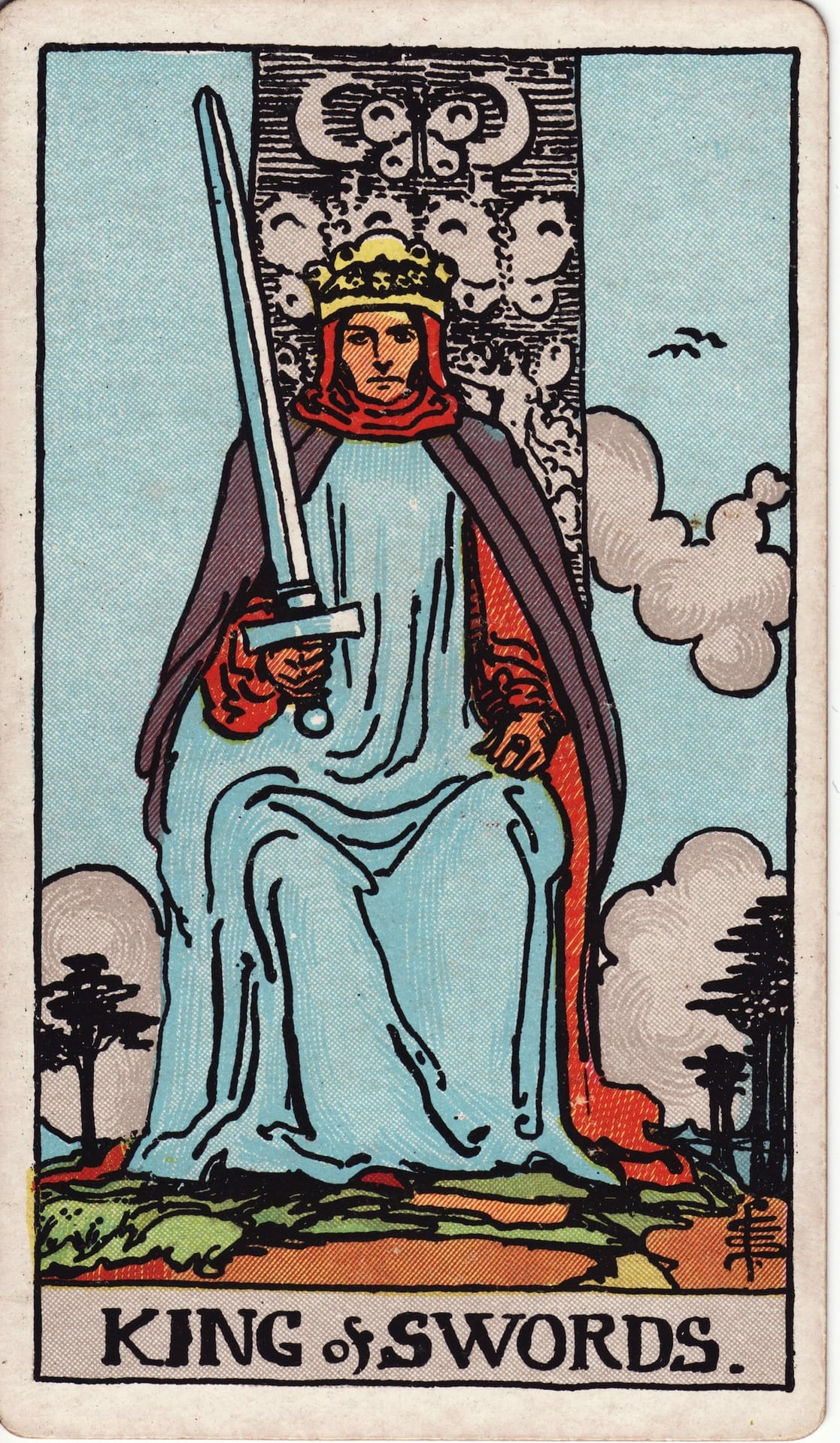
The King of Swords is one of the court cards in the suit of Swords in the Minor Arcana of the Tarot, representing intellectual mastery, authority, and truth.
When the King of Swords appears in the reverse in a Tarot reading, its upright qualities of intellectual mastery, authority, truth, and clear communication are disrupted, distorted, or misdirected.
Traditional Interpretation of the King of Swords
The King of Swords is often depicted as a regal figure seated on a throne, holding a sword upright, with a clear or stormy sky in the background, symbolizing intellectual power and justice. The imagery evokes authority, clarity, and disciplined thought. Key themes include:
-
Intellectual Mastery: The King of Swords signifies a sharp, analytical mind, representing someone who has mastered logical thinking, problem-solving, and decision-making, often approaching situations with objectivity and precision.
-
Authority and Leadership: This card reflects a commanding presence, often embodying a leader who uses intellect and fairness to guide others, such as in professional, legal, or ethical matters.
-
Truth and Justice: It emphasizes a commitment to truth, integrity, and fairness, where decisions are made based on reason and ethical principles, often cutting through deception or ambiguity.
-
Clear Communication: The King represents articulate, direct communication, delivering insights or judgments with clarity and authority, fostering understanding or resolution.
-
Cautionary Note: The card warns against being overly rigid, cold, or authoritarian, as the King’s focus on logic can sometimes lead to emotional detachment or harsh judgments that alienate others.
In a reading, the King of Swords encourages you to embody intellectual clarity, lead with fairness, and communicate truthfully. It’s a call to make decisions based on reason and integrity, set clear boundaries, and avoid letting intellectual dominance or detachment hinder emotional connections.
Traditional Interpretation of the Five of Cups in the reverse
Upright, the King of Swords embodies intellectual mastery, authority, truth, and clear communication. When appearing in the reverse, these qualities are obstructed or unbalanced, leading to the following meanings:
-
Abuse of Power or Authority: The King of Swords in the reverse suggests a misuse of intellectual or leadership power, where authority becomes manipulative, domineering, or overly controlling, leading to unfair judgments or oppression.
-
Clouded Judgment: The sharp clarity of the upright card falters, indicating biased thinking, irrational decisions, or a lack of objectivity, which can result in mistakes or misinterpretations.
-
Harsh or Manipulative Communication: The clear communication turns cruel, sarcastic, or deceptive, where words are used to wound, manipulate, or assert dominance, damaging relationships or trust.
-
Emotional Detachment or Coldness: The balance of intellect and emotion tips toward excessive detachment, where you or someone else becomes emotionally unavailable, dismissive, or overly critical, leading to isolation or conflict.
-
Cautionary Note: The King of Swords in the reverse warns against wielding intellect or authority in harmful ways, as this can alienate others or erode trust. It also cautions against letting pride or rigidity cloud judgment, urging a return to fairness and empathy.
In a reading, the King of Swords in the reverse encourages you to address manipulative or harsh tendencies, restore balanced judgment, and reconnect with compassion. It’s a call to avoid domineering behaviour, clarify distorted thinking, and communicate with integrity, while preventing emotional detachment or unfair leadership.
Alternative Interpretation of the King of Swords
An alternative interpretation might view the King of Swords through a more esoteric, psychological, or archetypal lens, emphasizing his role as a symbol of divine intellect, spiritual authority, or the alignment of mind and higher purpose. This perspective may draw from Jungian psychology, mythology, or spiritual traditions:
-
Divine Intellect: Esoterically, the King of Swords represents the mastery of divine mental clarity, where the sword symbolizes the piercing light of universal truth, guiding you to align with higher wisdom and spiritual insight.
-
Archetype of the Just Ruler: In a mythological sense, the card embodies the archetype of the just ruler or sage, akin to figures like King Solomon or Thoth, who wields intellectual and spiritual authority to uphold truth and justice.
-
Alignment of Mind and Spirit: Psychologically, the King of Swords signifies the integration of intellect and intuition, where disciplined thought supports spiritual growth, fostering a balanced approach to personal and spiritual authority.
-
Guardian of Higher Truth: The card reflects the role of protecting or embodying higher truth, using mental clarity to guide yourself or others toward spiritual alignment, cutting through illusions with wisdom.
-
Shadow of Rigidity or Detachment: The alternative view might highlight the shadow side as becoming overly rigid in thought or emotionally detached, where an overemphasis on intellect disconnects you from spiritual compassion or intuition.
This alternative interpretation might resonate in readings focused on spiritual leadership, intellectual alignment with higher purpose, or embodying divine truth, positioning the King of Swords as a symbol of wise authority with potential for emotional aloofness.
Summary (Upright)
-
Traditional: The King of Swords represents intellectual mastery, authority, truth, and clear communication, encouraging fair leadership with a caution against rigidity or detachment.
-
Alternative: The King of Swords symbolizes divine intellect, the just ruler archetype, alignment of mind and spirit, or guardian of higher truth, with a shadow of rigidity or detachment.
Alternative Interpretation of the King of Swords in the reverse
In the alternative interpretation, the King of Swords upright symbolizes divine intellect, the just ruler archetype, alignment of mind and spirit, and guardian of higher truth. When appearing in the reverse, these esoteric and archetypal themes are blocked or misaligned, leading to the following:
-
Blocked Divine Intellect: The King of Swords in the reverse may indicate a disconnection from spiritual clarity or universal truth, where mental rigidity, scepticism, or ego-driven thoughts obstruct alignment with higher wisdom, leading to spiritual confusion.
-
Weakened Just Ruler Archetype: The archetype of the just ruler or sage falters, suggesting difficulty embodying wise leadership or spiritual integrity, resulting in a loss of inner authority or misalignment with purpose.
-
Disrupted Mind-Spirit Alignment: Psychologically, the card appearing in the reverse reflects challenges in harmonizing intellect and intuition, where an over-reliance on logic or dismissal of spiritual insights creates inner conflict or disconnection from the higher self.
-
Misuse of Higher Truth: The role of guardian of truth is distorted, indicating a tendency to wield spiritual or intellectual insights in judgmental, manipulative, or self-serving ways, which hinders spiritual growth or authenticity.
-
Shadow of Arrogance or Detachment: The shadow side may manifest as intellectual arrogance (using spiritual knowledge to dominate or judge) or spiritual detachment (ignoring intuition or compassion), blocking holistic growth or connection.
In this alternative view, the King of Swords in the reverse might appear in readings focused on spiritual misalignment, loss of wise discernment, or challenges in embodying higher truth. It urges you to reconnect with divine wisdom, balance intellect with intuition, and lead with compassion, while avoiding arrogance or emotional detachment.
Summary (In the reverse)
-
Traditional meaning in the Reverse: The King of Swords in the reverse indicates abuse of authority, clouded judgment, harsh communication, or emotional detachment, calling for fair and compassionate leadership.
-
Alternative meaning in the Reverse: The King of Swords in the reverse reflects blocked divine intellect, weakened just ruler archetype, disrupted mind-spirit alignment, misuse of truth, or arrogance/detachment, urging alignment with spiritual wisdom.
|