|
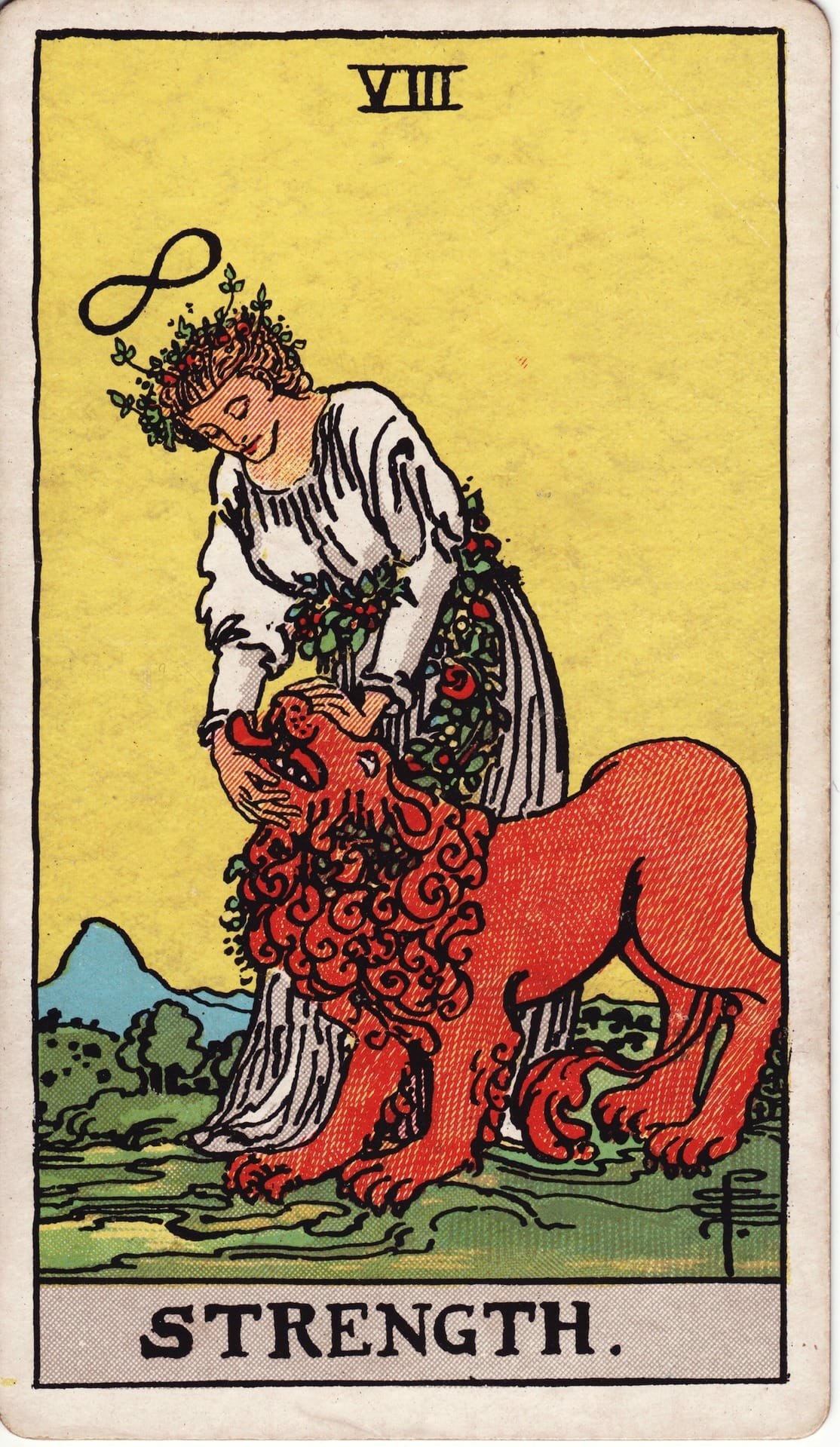
The Strength card is the eighth numbered card (VIII) of the Major Arcana in Tarot, symbolizing inner courage, compassion, and mastery over instincts.
When Strength appears in the reverse, its upright qualities of courage, compassion, self-mastery, and resilience are disrupted, blocked, or misdirected, introducing challenges or shadow aspects.
Traditional Interpretation of Strength
Strength is often depicted as a calm figure, typically a woman, gently taming a lion, with an infinity symbol above her head, symbolizing inner power and compassion. The imagery evokes resilience, gentleness, and control over primal forces. Key themes include:
-
Inner Courage: Strength represents resilience and bravery, facing challenges with quiet confidence rather than force or aggression.
-
Compassion and Patience: It emphasizes using kindness, empathy, and patience to overcome obstacles or tame inner instincts, such as anger or fear.
-
Self Mastery: The card reflects control over impulses, mastering emotions or desires to achieve balance and strength.
-
Endurance and Resilience: Strength signifies perseverance through difficulties, maintaining resolve without succumbing to doubt or exhaustion.
-
Cautionary Note: The card warns against suppressing emotions excessively or lacking assertiveness, urging a balance between gentleness and firmness to avoid weakness or overcontrol.
In a reading, The Strength card encourages you to tap into your inner resolve, approach challenges with compassion and patience, and maintain control over your instincts. It’s a call to trust your resilience while ensuring you don’t suppress your authentic feelings.
Traditional Interpretation of Strength in the reverse
When the Strength card appears in the reverse, its upright qualities courage, compassion, self-mastery, and resilience are disrupted, blocked, or misdirected, introducing challenges or shadow aspects.
-
Lack of Confidence: Strength in the reverse suggests self-doubt, insecurity, or a lack of inner resolve, making it difficult to face challenges or assert yourself.
-
Loss of Control: It indicates losing mastery over emotions or instincts, such as succumbing to anger, fear, or impulsiveness, leading to overwhelm or chaos.
-
Weakness or Fatigue: The card reflects exhaustion, burnout, or a lack of endurance, where resilience falters under pressure or prolonged difficulties.
-
Overbearing Behaviour: Conversely, it can suggest using force instead of compassion, overpowering others or suppressing emotions to maintain control.
-
Cautionary Note: The Strength card in the reverse warns against giving in to fear, acting impulsively, or becoming overly controlling, urging you to rebuild confidence, balance emotions, and approach challenges with patience.
In a reading, Strength in the reverse encourages addressing self-doubt or emotional overwhelm, rediscovering inner courage, and balancing gentleness with assertiveness to restore resilience.
Alternative Interpretation of Strength
An alternative interpretation views The Strength card through an esoteric, psychological, or archetypal lens, emphasizing its spiritual and transformative significance. This perspective draws from Jungian psychology, mythology, or mystical traditions:
-
Divine Fortitude: Esoterically, Strength represents the soul’s alignment with divine love, channeling spiritual courage to overcome inner or outer challenges with grace.
-
Archetype of the Tamer: The card aligns with the archetype of the tamer or healer, akin to figures like Saint Francis or the goddess Durga, embodying compassionate power to harmonize primal and spiritual energies.
-
Integration of Instincts: Psychologically, Strength signifies integrating the shadow self (e.g., primal instincts or fears) into conscious awareness, fostering wholeness and spiritual growth.
-
Spiritual Resilience: The card reflects the soul’s capacity to endure trials through faith and divine connection, using love to transform challenges into opportunities for growth.
-
Shadow of Repression: The alternative view highlights the shadow side as repressing natural instincts or over-relying on spiritual ideals, risking disconnection from authentic emotions or physical reality.
This interpretation might resonate in readings focused on spiritual courage, emotional integration, or overcoming inner struggles, positioning Strength as a symbol of compassionate mastery with the need for balanced expression.
Alternative Interpretation of Strength in the reverse
In a reading, the Strength card in the reverse encourages addressing self-doubt or emotional overwhelm, rediscovering inner courage, and balancing gentleness with assertiveness to restore resilience.
-
Blocked Divine Fortitude: The Strength card in the reverse suggests a disconnection from spiritual courage, where fear, ego, or external pressures block alignment with divine love or inner strength.
-
Weakened Tamer Archetype: The tamer archetype falters, indicating difficulty harmonizing primal instincts with spiritual awareness, leading to spiritual or emotional imbalance.
-
Inner Disintegration: Psychologically, it reflects a struggle to integrate the shadow self, where repressed fears or instincts create inner turmoil or spiritual stagnation.
-
Misdirected Resilience: The role of spiritual resilience is disrupted, leading to either avoidance of challenges (lacking faith) or forceful control (ignoring compassion), hindering soul growth.
-
Shadow of Repression or Aggression: The shadow side may manifest as repressing authentic emotions (disconnecting from spiritual truth) or aggressive overcontrol (misusing power), obstructing transformation.
This interpretation might appear in readings focused on spiritual disconnection, blocked courage, or challenges in balancing instincts with higher purpose, urging reconnection with divine love and inner harmony.
Summary (Upright)
-
Traditional: The Strength card represents inner courage, compassion, self-mastery, and resilience, encouraging patient resolve with a caution against suppression or weakness.
-
Alternative: The Strength card symbolizes divine fortitude, the tamer archetype, integration of instincts, and spiritual resilience, with a shadow of repression.
Summary (In the reverse)
-
Traditional meaning in the reverse: indicates lack of confidence, loss of control, weakness, or overbearing behavior, urging restored courage and balance.
-
Alternative meaning in the reverse: reflects blocked divine fortitude, weakened tamer archetype, inner disintegration, or misdirected resilience, urging spiritual realignment.
|
 If you like this content, please consider supporting me through my