|
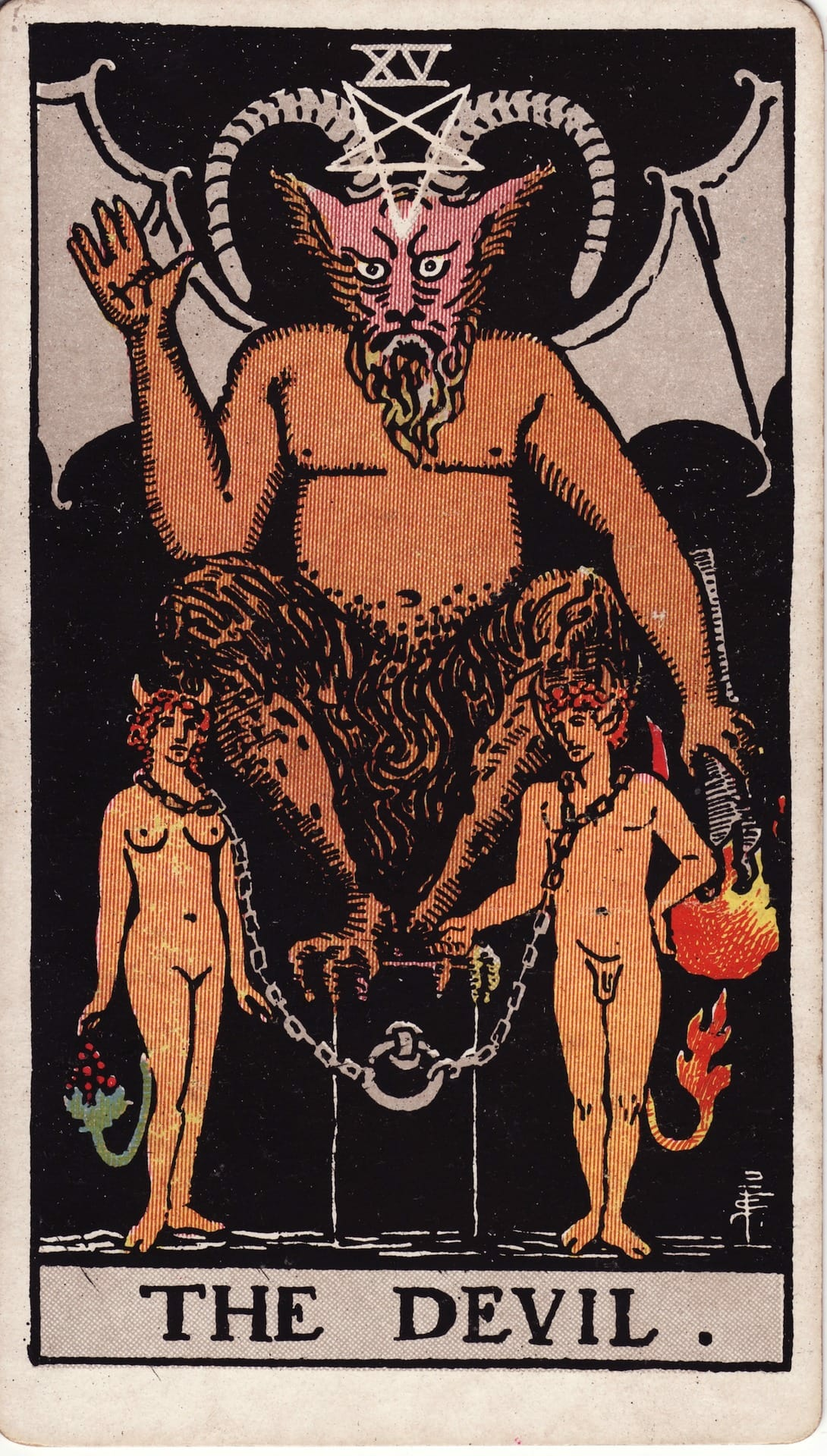
The Devil is the fifteenth numbered card (XV) of the Major Arcana in Tarot, symbolizing temptation, bondage, and materialism.
When The Devil card appears in the reverse, its upright qualities of temptation, bondage, shadow self, and power dynamics are disrupted, transformed, or misdirected, introducing shifts or challenges.
Traditional Interpretation of the Devil
The Devil card is often depicted as a horned figure (sometimes resembling Baphomet or a satyr) sitting above two chained figures, with an inverted pentagram and torches, symbolizing entrapment and desire. The imagery evokes restriction, temptation, and the shadow side of human nature. Key themes include:
-
Temptation and Desire: The Devil signifies being drawn to materialism, pleasure, or unhealthy desires, such as addiction, obsession, or instant gratification.
-
Bondage and Restriction: It represents feeling trapped by external circumstances, unhealthy relationships, or self-imposed limitations, often due to choices or attachments.
-
Shadow Self: The card highlights confronting darker aspects of the self, such as fear, greed, or destructive behaviors, urging awareness of these patterns.
-
Power Dynamics: It can indicate control issues, manipulation, or being controlled by others, reflecting imbalanced relationships or dependencies.
-
Cautionary Note: The Devil warns against succumbing to temptation or ignoring the chains binding you, urging self-awareness and breaking free from unhealthy patterns.
In a reading, The Devil encourages you to recognize and confront limiting behaviors, attachments, or dependencies. It’s a call to acknowledge your shadow, take responsibility for your choices, and seek liberation from what binds you, while avoiding denial or indulgence.
Traditional Interpretation of the Devil in the reverse
When The Devil appears in the reverse, its upright qualities of temptation, bondage, shadow self, and power dynamics are disrupted, transformed, or misdirected, introducing shifts or challenges.
-
Liberation from Bondage: The Devil in the reverse suggests breaking free from unhealthy attachments, addictions, or restrictive situations, reclaiming personal power and freedom.
-
Awareness of Shadow: It indicates recognizing limiting behaviors or patterns, such as acknowledging addictions or toxic relationships, leading to empowerment through self-awareness.
-
Release of Control: The card reflects letting go of manipulative dynamics, either by stopping controlling behavior or escaping the control of others.
-
Overcoming Temptation: It signifies resisting destructive desires or habits, choosing healthier paths and reclaiming agency over your choices.
-
Cautionary Note: The Devil in the reverse warns against partial liberation or falling back into old patterns, urging you to maintain commitment to freedom and avoid complacency.
In a reading, the Devil in the reverse encourages embracing freedom from limitations, confronting your shadow, and taking steps to release unhealthy attachments, while staying vigilant to avoid relapse.
Alternative Interpretation of the Devil
An alternative interpretation views The Devil through an esoteric, psychological, or archetypal lens, emphasizing its spiritual and transformative significance. This perspective draws from Jungian psychology, mythology, or mystical traditions:
-
Shadow Integration: Esoterically, The Devil represents the shadow archetype, embodying the unacknowledged or repressed aspects of the soul that must be faced for spiritual growth and liberation.
-
Archetype of the Tempter: The card aligns with the tempter or trickster archetype, akin to figures like Lucifer or Pan, symbolizing the challenge of confronting ego-driven desires to align with divine truth.
-
Spiritual Bondage: Psychologically, it signifies being trapped by illusions, fears, or ego-based attachments, urging integration of the shadow to achieve spiritual wholeness.
-
Material-Spiritual Conflict: The card reflects the tension between material desires and spiritual purpose, highlighting the need to transcend earthly temptations to align with higher consciousness.
-
Shadow of Denial: The alternative view highlights the shadow side as denying the darker self or overindulging in ego-driven pursuits, risking spiritual disconnection or entrapment.
This interpretation might resonate in readings focused on spiritual awakening, shadow work, or overcoming inner limitations, positioning The Devil as a symbol of confronting the shadow with the need for awareness and liberation.
Alternative Interpretation of the Devil in the reverse
In a reading, the Devil in the reverse encourages embracing freedom from limitations, confronting your shadow, and taking steps to release unhealthy attachments, while staying vigilant to avoid relapse.
-
Emerging from Spiritual Bondage: The Devil in the reverse suggests liberation from spiritual entrapment, where awareness of ego-driven illusions allows alignment with divine truth and soul purpose.
-
Weakened Tempter Archetype: The tempter archetype shifts, indicating progress in confronting the shadow or overcoming ego-based desires, though challenges may persist.
-
Inner Liberation: Psychologically, it reflects integrating the shadow self, releasing fears or illusions to foster spiritual growth and authenticity.
-
Realigned Spiritual Path: The role of material-spiritual conflict is resolved, leading to freedom from ego-driven attachments or renewed alignment with higher consciousness.
-
Shadow of Relapse or Denial: The shadow side may manifest as incomplete liberation (falling back into spiritual illusions) or denying remaining shadow aspects, risking spiritual stagnation.
This interpretation might appear in readings focused on spiritual liberation, shadow integration, or breaking free from ego-driven patterns, urging continued awareness and alignment with divine purpose.
Summary (Upright)
-
Traditional: The Devil represents temptation, bondage, shadow self, and power dynamics, encouraging awareness of limitations with a caution against indulgence or denial.
-
Alternative: The Devil symbolizes shadow integration, the tempter archetype, spiritual bondage, and material-spiritual conflict, with a shadow of denial.
Summary (In the reverse)
-
Traditional meaning in the reverse: The Devil in the reverse indicates liberation from bondage, awareness of shadow, release of control, or overcoming temptation, urging sustained freedom.
-
Alternative meaning in the reverse: The Devil in the reverse reflects emerging from spiritual bondage, weakened tempter archetype, inner liberation, or realigned spiritual path, urging continued shadow work.
|
 If you like this content, please consider supporting me through my