|
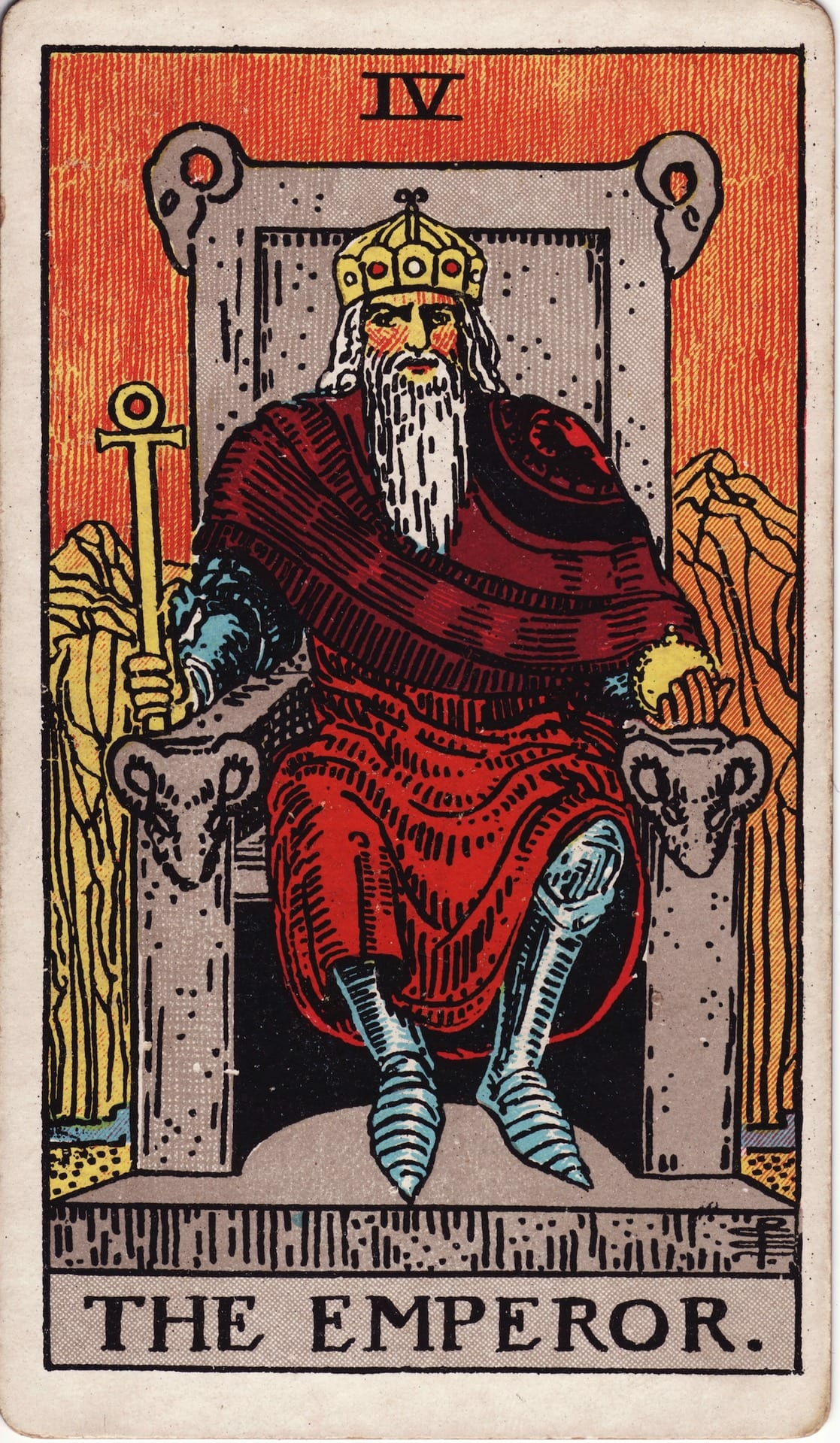
The Emperor is the fourth numbered card (IV) of the Major Arcana in Tarot, embodying authority, structure, and control.
When The Emperor appears in the reverse, its upright qualities of authority, structure, protection, and discipline are disrupted, blocked, or misdirected, introducing challenges or shadow aspects.
Traditional Interpretation of the Emperor
The Emperor is often depicted as a regal figure seated on a throne adorned with ram heads (symbolizing Aries), holding a scepter and orb, with a backdrop of mountains, representing stability and authority. The imagery evokes discipline, leadership, and order. Key themes include:
-
Authority and Leadership: The Emperor signifies strong leadership, taking charge, and establishing control in personal or professional spheres, often as a figure of power or guidance.
-
Structure and Stability: It represents the creation of order, rules, and systems, providing a solid foundation for success through discipline and organization.
-
Protection and Responsibilty: The card embodies a protective, paternal energy, taking responsibility for others or ensuring security through decisive action.
-
Logic and Discipline: The Emperor emphasizes rational thinking, planning, and adherence to principles, prioritizing structure over emotions.
-
Cautionary Note: The card warns against rigidity, authoritarianism, or over-controlling behavior, which can stifle creativity or alienate others, urging balance with flexibility.
In a reading, The Emperor encourages embracing you to take control, establish structure, and lead with confidence. It’s a call to embrace discipline and responsibility while avoiding excessive rigidity or dominance.
Traditional Interpretation of the Emperor in the reverse
When The Emperor appears in the reverse, its upright qualities of authority, structure, protection, and discipline are disrupted, blocked, or misdirected, introducing challenges or shadow aspects.
-
Lack of Authority or Control: The Emperor in the reverse suggests weakness in leadership, lack of discipline, or inability to maintain order, leading to chaos or indecision.
-
Authoritarianism or Rigidity: It indicates overbearing control, domineering behavior, or excessive rigidity, stifling others or creating conflict.
-
Instability or Lack of Structure: The card reflects a crumbling foundation, where systems or plans fail due to poor organization or resistance to responsibility.
-
Avoidance of Responsibility: The protective energy becomes neglectful, shirking duties or failing to provide stability for oneself or others.
-
Cautionary Note: The Emperor in the reverse warns against either weak leadership or oppressive control, urging you to restore balanced authority, rebuild structure, and embrace responsibility with flexibility.
In a reading, the Emperor in the reverse encourages addressing issues of control, rebuilding stability, and balancing discipline with compassion to regain effective leadership.
Alternative Interpretation of the Emperor
An alternative interpretation views The Emperor through an esoteric, psychological, or archetypal lens, emphasizing his spiritual and transformative significance. This perspective draws from Jungian psychology, mythology, or mystical traditions:
-
Divine Authority: Esoterically, The Emperor represents divine masculine energy, embodying spiritual authority and the power to create order aligned with universal principles.
-
Archetype of the Divine Father: The card aligns with the divine father or king archetype, akin to figures like Zeus or Osiris, symbolizing wisdom, protection, and the establishment of divine order in the material world.
-
Inner Structure: Psychologically, The Emperor signifies the development of inner discipline and self-mastery, creating a stable foundation for spiritual and personal growth.
-
Sacred Order: The card reflects the alignment of personal will with divine will, using structure and responsibility to manifest soul purpose in the physical realm.
-
Shadow of Control: The alternative view highlights the shadow side as spiritual rigidity or ego-driven control, where authority disconnects from compassion or divine guidance.
This interpretation might resonate in readings focused on spiritual leadership, establishing inner order, or aligning with divine purpose, positioning The Emperor as a symbol of structured power with the need for balance with compassion.
Alternative Interpretation of the Emperor in the reverse
In a reading, the Emperor in the reverse encourages addressing issues of control, rebuilding stability, and balancing discipline with compassion to regain effective leadership.
-
Blocked Divine Authority: The Emperor in the reverse suggests a disconnection from divine masculine energy, where fear, ego, or external pressures block spiritual leadership or alignment with universal order.
-
Weakened Divine Father Archetype: The divine father archetype falters, indicating difficulty embodying wisdom or protection, leading to spiritual disarray or lack of purpose.
-
Inner Chaos: Psychologically, it reflects a lack of inner discipline or self-mastery, where self-doubt or scattered energy hinders spiritual growth or soul alignment.
-
Misdirected Control: The role of sacred order is disrupted, leading to ego-driven control, spiritual rigidity, or neglecting divine responsibility, causing misalignment.
-
Shadow of Tyranny or Weakness: The shadow side may manifest as tyrannical control (imposing ego over divine will) or weakness (avoiding spiritual responsibility), hindering soul progress.
This interpretation might appear in readings focused on spiritual misalignment, blocked leadership, or challenges in establishing inner order, urging reconnection with divine authority and balanced discipline.
Summary (Upright)
-
Traditional: The Emperor represents abundance, nurturing, creativity, and connection to nature, encouraging caregiving and prosperity with a caution against over-nurturing or dependency.
-
Alternative: The Emperor symbolizes divine feminine energy, the Great Mother archetype, creative manifestation, and sacred connection to Earth, with a shadow of overindulgence.
Summary (In the reverse)
-
Traditional meaning in the reverse: The Emperor in the reverse indicates lack of authority, authoritarianism, instability, or avoidance of responsibility, urging balanced leadership and structure.
-
Alternative meaning in the reverse: The Emperor in the reverse reflects blocked divine authority, weakened divine father archetype, inner chaos, or misdirected control, urging spiritual realignment.
|
 If you like this content, please consider supporting me through my